Faith Without Fear: How Geneva Families Are Unlearning Harm and Building Belief That Sets People Free
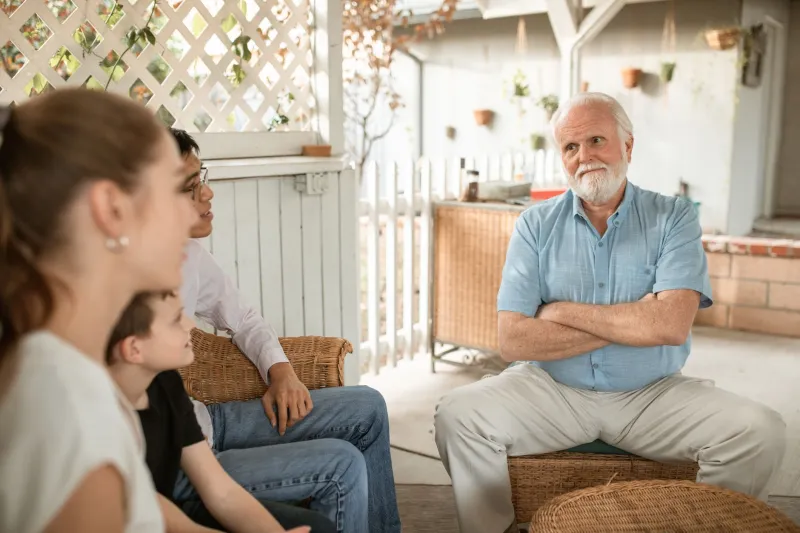
Sarah Brennan did not stop believing in God when she left her childhood church at the age of twenty-three. What she stopped believing in was her own worthiness to approach God at all. That distinction, she says, took years to understand — and several more to begin dismantling.
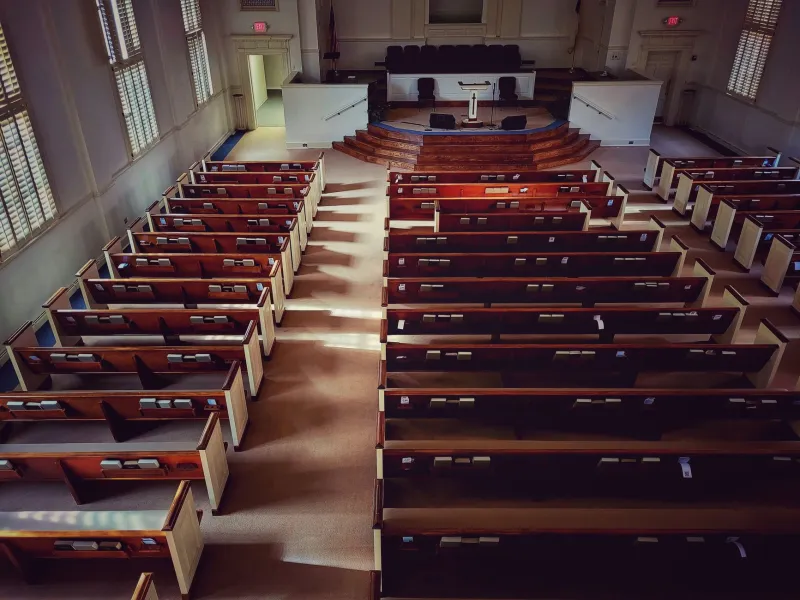
"The theology I was raised in was built around fear," she explains, sitting in the bright fellowship hall at First UMC Geneva on a Wednesday morning. "Fear of getting it wrong. Fear of asking the wrong questions. Fear of the wrong friends, the wrong music, the wrong thoughts. By the time I was an adult, I had internalized all of it so completely that I could not tell where the fear ended and where I began."
Sarah's story is more common than many people realize. Religious trauma — a term that has moved from clinical psychology into broader public conversation in recent years — describes the psychological and emotional harm that can result from religious environments characterized by fear-based theology, authoritarian leadership, rigid behavioral control, and the weaponization of shame. It is not a fringe experience. Researchers estimate that a significant percentage of American adults who grew up in religious households carry some degree of spiritual harm, ranging from mild discomfort to symptoms that closely resemble complex post-traumatic stress.
What is less often discussed — and what is quietly happening in Geneva — is the growing number of people like Sarah who have not simply walked away from faith but are actively, intentionally reconstructing it. And the communities they are finding, or building, in the process.
The Difference Between Leaving and Healing
For many survivors of harmful religious environments, the first step is simply departure — a necessary and often painful severance from the community and belief system that caused harm. But departure, while essential, is not the same as healing. And healing, many are discovering, does not require the abandonment of faith itself.
"There is an important distinction between leaving a toxic religious system and leaving faith," says the Reverend Claire Morrow, an ordained United Methodist minister who has worked extensively with individuals navigating religious harm. "Many people conflate the two because the system they were in presented itself as the only valid expression of Christianity. When you leave that system, it can feel like you are leaving God. Part of the healing work is learning to separate the institution from the sacred — to recognize that what hurt you was a human construction, not a divine one."
This distinction is, for many, both theologically and psychologically liberating. It opens the possibility that faith itself — stripped of its punitive distortions — might be not the source of harm but a resource for recovery.
What Makes a Congregation Feel Safe
For those who have been hurt by religious institutions, the question of what makes a new congregation genuinely safe is not abstract. It is the difference between re-engagement and re-traumatization. And it turns out that the qualities they describe — with striking consistency — align closely with the stated values of progressive Methodist communities.
Transparency in leadership ranks near the top of nearly every account. Congregations where authority is exercised without accountability, where clergy are positioned as unquestionable intermediaries between the individual and the divine, reproduce the dynamics that caused harm in the first place. By contrast, communities where leadership is shared, where questions are welcomed, and where the pastor is visibly accountable to the congregation tend to feel structurally different from the outset.
Theological humility is equally significant. For many survivors, the most damaging feature of their former community was its certainty — its insistence that it possessed the exclusive and complete truth, and that deviation from that truth carried eternal consequences. Communities that hold their theological convictions with intellectual honesty, acknowledge the limits of human understanding, and make room for doubt and inquiry without treating them as spiritual deficiencies offer something that feels, to the religiously wounded, almost startlingly generous.
At First UMC Geneva, these values are not incidental. They are embedded in the Wesleyan theological tradition itself — in Wesley's famous insistence that Christians pursue holiness through reason, experience, and scripture together, rather than through scripture alone interpreted by authority alone. The tradition, at its best, has always been suspicious of certainty wielded as a weapon.
Raising Children Differently
Perhaps the most urgent dimension of this conversation involves the next generation. For parents who carry religious harm, the question of how to pass on faith — or whether to do so at all — is one of the most fraught they face.
David and Keisha Okonkwo, Geneva residents and parents of three children under the age of twelve, both grew up in churches they describe as spiritually damaging. For years after leaving, they avoided religious community entirely. When they eventually found their way to First UMC Geneva, it was with deep ambivalence.
"We wanted our children to have a sense of the sacred, a community, a moral framework that was larger than our individual family," Keisha explains. "But we were terrified of replicating what had been done to us. We needed to see, concretely, that this was a different kind of place."
What they looked for — and eventually found — was a children's program that taught faith as invitation rather than obligation, that presented God as characterized primarily by love rather than by surveillance and judgment, and that explicitly encouraged children to ask questions without framing doubt as dangerous. They looked for a community where their children would be taught that they were beloved unconditionally — not as a theological footnote, but as the central, organizing truth of everything else.
"The message my children are receiving here is that they belong to God and to this community exactly as they are," David says. "That was not the message I received. I was told I belonged conditionally — that the belonging could be revoked. Teaching my kids something different is the most important spiritual work I have ever done."
The Congregation as Repair
What is emerging in Geneva, across several progressive congregations and most visibly at First UMC Geneva, is something that might be described as an ecology of repair — a community culture in which the healing of religious harm is understood not as a private therapeutic project but as a collective spiritual responsibility.
This means, in practice, that the congregation actively works to embody the opposite of what caused harm: transparency instead of opacity, invitation instead of coercion, grace instead of shame, and the freedom to doubt as a sign of honest engagement rather than spiritual failure.
It means that the language used from the pulpit, in children's programming, in pastoral counseling, and in ordinary fellowship is chosen with awareness of the weight that certain words and framings carry for those who have been hurt.
And it means that the community holds, without flinching, the tension between conviction and humility — believing deeply while acknowledging freely that the mystery of God exceeds any single tradition's capacity to contain it.
For Sarah Brennan, who now volunteers in the young adult ministry at First UMC Geneva, the journey from fear-based faith to something she can actually inhabit has taken the better part of a decade. She does not describe it as finished.
"But I can tell you what it feels like now," she says. "It feels like breathing. It feels like the faith was always supposed to feel — like something that opens you up rather than closes you down. Like grace, finally, without the footnotes."
That is not a small thing. In fact, it may be the whole point.