After the Casseroles Stop Coming: How Geneva's Church Grief Ministries Are Holding the Bereaved When Everyone Else Has Moved On
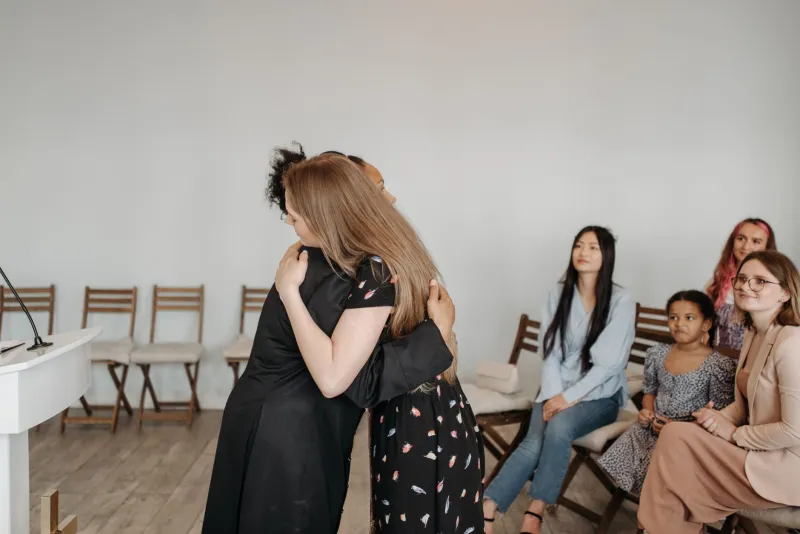
After the Casseroles Stop Coming: How Geneva's Church Grief Ministries Are Holding the Bereaved When Everyone Else Has Moved On
There is a particular silence that descends on a grieving household about three weeks after a funeral. The flowers have wilted and been discarded. The casseroles, delivered with such loving intention by neighbors and coworkers, have long since been eaten or frozen. The out-of-town relatives have returned to their own lives. And the bereaved — spouse, parent, child, sibling — are left alone with a loss that has barely begun to make itself fully known.
It is precisely into that silence that the grief ministries of Geneva's faith communities have chosen to step.
Across the city, congregations affiliated with mainline Protestant traditions, including First United Methodist Church of Geneva, have quietly developed robust frameworks for accompanying the bereaved — not merely in the immediate aftermath of death, but through the long, nonlinear, frequently misunderstood journey of mourning that can stretch across months and years. What these ministries offer is something neither the healthcare system nor the therapeutic community is structurally equipped to provide: sustained, spiritually grounded companionship without a billing code or a session limit.
The Gap That Grief Reveals
American culture has a complicated relationship with death. We have developed extraordinary medical capacity to delay it, yet we have grown remarkably poor at sitting with it once it arrives. Grief counseling, when it is accessible at all, is typically short-term and insurance-dependent. Hospitals discharge the bereaved with pamphlets. Employee assistance programs offer a handful of sessions. Friends and colleagues, however well-meaning, frequently grow uncomfortable with protracted sorrow and begin — gently, unconsciously — to signal that it is time to move on.
The result is a population of mourners who are, in a very real sense, underserved. Research has consistently demonstrated that unprocessed grief contributes to depression, physical illness, social isolation, and in its most severe forms, complicated grief disorder. Yet the infrastructure for sustained grief support in most American communities remains thin.
Churches, it turns out, may be among the last institutions that have both the relational architecture and the theological framework to fill this gap.
What a Spiritual Framework Actually Offers
It would be a mistake to characterize church-based grief support as simply a cheaper or more accessible alternative to clinical therapy. The distinction is not merely logistical — it is philosophical.
Clinical grief therapy operates, appropriately, within a diagnostic and treatment paradigm. It is concerned with symptom reduction, functional restoration, and the mitigation of pathological grief responses. These are legitimate and valuable goals. But they are not the only goals a grieving person carries.
The bereaved also carry questions that no DSM category addresses: Why did this happen? Where is my loved one now? How do I speak to God when I am furious at God? What does my life mean now that the person who helped give it meaning is gone?
These are theological questions, and they require theological companionship. Grief ministries rooted in the Wesleyan tradition — as those at First UMC Geneva are — draw on a rich inheritance of thought about suffering, grace, and resurrection hope. John Wesley himself wrote extensively about the pastoral care of the dying and the bereaved, and the Methodist movement has long understood the congregation as a community of mutual accountability and support that extends into the most vulnerable seasons of human life.
Facilitators of church-based grief groups are not therapists, and they do not pretend to be. What they offer instead is something complementary: the presence of fellow travelers who have themselves known loss, who bring no clinical agenda, and who are willing to remain in the room with grief for as long as it takes.
Voices From the Circle
At First UMC Geneva, the grief support ministry meets on the second and fourth Tuesday of each month in a fellowship hall that has been arranged, deliberately, without a podium or a stage. Chairs form a circle. Coffee is always present. Silence is permitted.
One longtime facilitator, a retired schoolteacher who lost her husband of forty-one years to a sudden cardiac event, describes her motivation simply: "Nobody told me it would still hurt this much two years later. I needed someone to tell me that was normal. Now I get to be that someone for other people."
Another participant, a man in his early sixties who had never attended a grief group before his adult daughter's death from cancer, arrived skeptical and stayed for eight months. "I'm not a crier," he said. "I'm not someone who talks about feelings. But these people didn't require me to be anything other than what I was. They just kept showing up, and eventually I did too."
That phrase — showing up — recurs with striking frequency in conversations with grief ministry participants across Geneva's congregations. It points to something essential about what the church uniquely offers: not a program or a protocol, but a presence. A community that, by its very nature, does not have the option of discharging you.
The Slow Grief Nobody Talks About
One dimension of grief ministry that distinguishes church-based care from most clinical models is its attentiveness to what might be called the slow griefs — the losses that do not announce themselves with a funeral but accumulate quietly over time.
The grief of watching a spouse disappear into dementia. The grief of a body that no longer functions as it once did. The grief of a child who has drifted away, or a friendship that has dissolved, or a version of oneself that can never be recovered. These losses are real, they are profound, and they are largely invisible to a culture that reserves its grief language for death.
Faith communities that have developed thoughtful grief ministries tend to understand, intuitively, that the human capacity for loss is broader than any single category. The same spiritual resources that accompany a widow also have something to offer the man whose retirement has left him adrift, or the woman whose last child has left home, or the congregation member slowly losing her independence to chronic illness.
This expansive understanding of grief is, in many ways, one of the most theologically honest contributions the church can make to its community.
An Invitation, Not an Obligation
It is worth noting, with some care, what church grief ministries are not. They are not a substitute for professional mental health care, and responsible facilitators are trained to recognize when a participant's needs exceed what peer support can appropriately address and to make referrals accordingly. They are not evangelism programs in disguise; participants across Geneva's congregations include the churched and the unchurched, the devout and the quietly skeptical. They are not spaces where grief is resolved so much as places where it is honored.
What they are, at their best, is a living expression of one of the oldest imperatives in the Christian tradition: Rejoice with those who rejoice; mourn with those who mourn. Romans 12:15 does not suggest that mourning is a problem to be solved. It suggests that mourning is a human experience to be shared.
In a culture that has largely lost the art of sitting with sorrow, Geneva's faith communities are quietly, persistently, and without fanfare recovering it — one Tuesday evening circle at a time.
If you or someone you love is navigating loss of any kind, we encourage you to reach out to the pastoral care team at First UMC Geneva. The ministry of showing up begins with a single phone call.