Sacred Citizenship: How Geneva's Congregations Are Calling the Faithful to the Ballot Box
Sacred Citizenship: How Geneva's Congregations Are Calling the Faithful to the Ballot Box
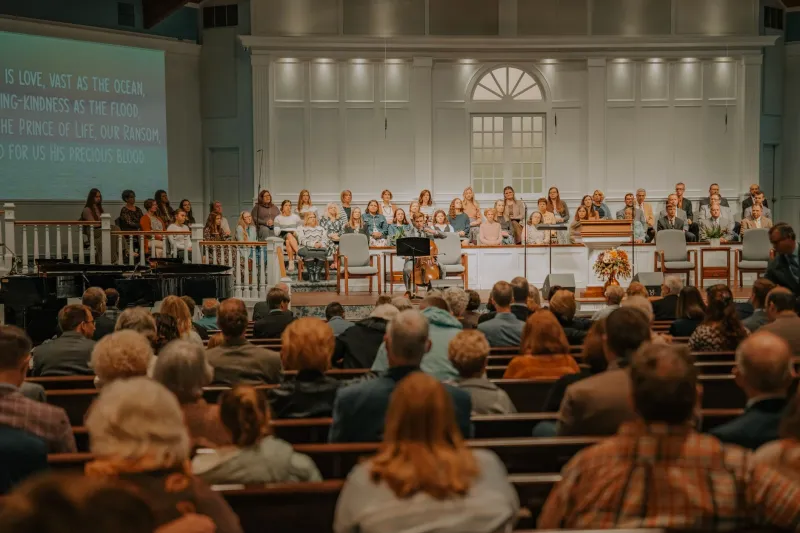
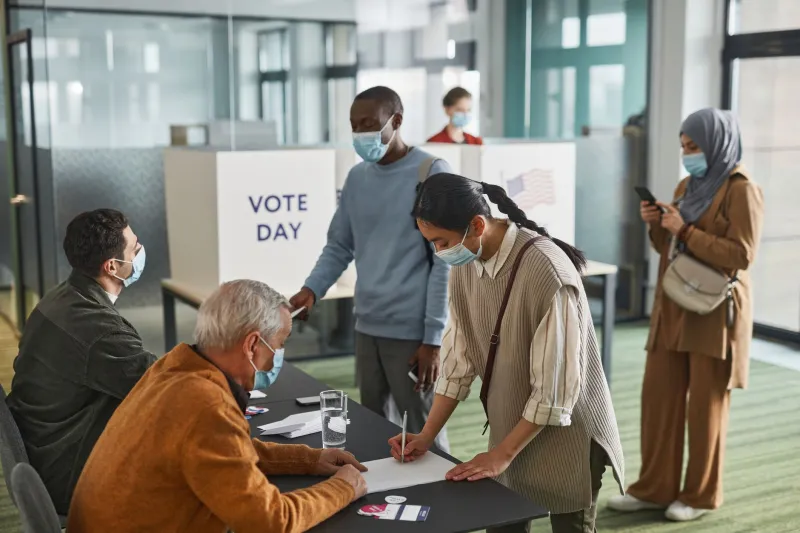
There is a particular kind of quiet that settles over a sanctuary on a Tuesday morning — the kind that feels less like emptiness and more like readiness. At First United Methodist Church of Geneva, that readiness has lately taken on a new dimension. Folding tables now appear in the fellowship hall on certain weekday evenings, staffed not by Sunday school teachers or potluck organizers, but by volunteers equipped with voter registration forms, sample ballots, and a shared sense of purpose that many of them struggle to fully articulate — until they try.
"I never thought of voting as something my faith had anything to say about," admits Margaret, a longtime member of the congregation who joined a citizenship education night last autumn. "I thought religion and politics were supposed to stay in separate rooms. But the more I sat with it, the more I realized that the policies we vote on determine whether my neighbors have enough to eat, whether their children have safe schools, whether families in this town can afford to stay. How is that not my business as a Christian?"
Her question is one that Methodist tradition has been wrestling with — and largely answering — for centuries.
The Theological Roots of Civic Engagement
John Wesley, the eighteenth-century Anglican priest whose teachings gave rise to Methodism, was famously uninterested in a faith that stayed indoors. His theology of social holiness — the conviction that personal transformation and communal transformation are inseparable — became a cornerstone of the Methodist movement. Wesley himself campaigned against the slave trade, advocated for prison reform, and organized schools for the poor. For Wesley, loving God and loving neighbor were not sequential acts. They were simultaneous ones.
That inheritance shapes the way progressive Methodist congregations like First UMC Geneva approach civic life today. The United Methodist Church's Social Principles, updated periodically by the denomination's General Conference, explicitly affirm the importance of political participation, calling members to engage the structures of society as an expression of their faith. Voting, in this framework, is not merely a civic right. It is a form of neighborly love made institutional.
The Rev. Dr. James Calloway, who has served congregations in the Fox River Valley for more than two decades, frames it plainly: "When Jesus says 'love your neighbor,' he doesn't put a boundary around what that love is allowed to touch. It touches housing. It touches healthcare. It touches education and wages and the environment. Every one of those things is shaped by policy, and policy is shaped by elections. If we love our neighbors, we participate in the systems that govern their lives."
Nonpartisan by Design, Prophetic by Nature
The voter engagement work happening in and around First UMC Geneva is deliberately nonpartisan — a distinction that organizers take seriously. Candidate forums hosted by the congregation invite speakers from across the political spectrum, with ground rules emphasizing respectful dialogue and substantive exchange. Voter registration drives are open to all eligible residents regardless of party affiliation. Citizenship education nights cover the mechanics of participation: how to register, how to find your polling place, what to expect on Election Day, and how to research ballot measures.
"We are not here to tell anyone who to vote for," says Linda Okafor, a lay leader who helped coordinate last fall's registration drive. "We are here to make sure that everyone who wants to participate in our democracy has the tools to do so. That is a justice issue. Barriers to voting are barriers to belonging, and the church has always had something to say about belonging."
The nonpartisan framing also creates unusual space for conversation. At a recent forum on local infrastructure and school funding, attendees who might never have sat together in a political context found themselves sharing concerns about the same roads, the same classrooms, the same community center budget. The church, in its neutral but engaged posture, functioned as something Geneva does not have enough of: a place where civic disagreement could happen without becoming civic rupture.
Voices from the Congregation
Not everyone arrives at this work easily. For some congregants, the association between organized religion and partisan politics — a very real and often damaging phenomenon in American life — creates legitimate hesitation. David Reyes, a retired teacher who joined First UMC Geneva three years ago, describes his initial wariness with characteristic directness.
"I had been burned before," he says. "I grew up in a church that told you who to vote for from the pulpit. It felt coercive. It felt like faith being used as a lever. When I heard we were doing voter engagement here, I had to see it for myself before I trusted it."
What he found, he says, was something categorically different. "There was no agenda except participation. Nobody was pushing a candidate or a party. They were just saying: you have a voice, and that voice matters, and we want to help you use it. That felt like something I could get behind."
For others, the journey has been more directly transformative. Aisha Thornton, a young professional and relatively new member of the congregation, describes attending a citizenship education night almost on a whim and leaving with a sense of vocation she had not anticipated.
"I had voted before, but I had never really understood how much of local government was shaped by elections I wasn't paying attention to," she says. "School boards. Water commissioners. County clerks. These are the people who make decisions that affect daily life in ways that the national news never covers. I walked out of that room feeling like I had been handed a map I didn't know existed."
She has since become a volunteer at subsequent events, helping other congregants navigate the registration process and understand down-ballot races.
Building Toward a Culture of Participation
First UMC Geneva's civic engagement programming does not exist in isolation. It is part of a broader ecumenical effort that includes several Geneva-area congregations — Catholic, Lutheran, and Baptist communities among them — who have found common ground in the conviction that democratic participation is a moral imperative that transcends denominational lines.
The coalition meets quarterly to share resources, coordinate event calendars, and discuss how to reach residents who are eligible to vote but have never done so. Their shared language is not partisan. It is pastoral. They speak of empowerment, of dignity, of the responsibility that comes with living in a self-governing society.
As the next election cycle approaches, the planning has already begun. New citizenship education nights are being scheduled. Partnerships with Geneva's public library and community college are being explored. A multilingual voter guide, designed to reach Spanish-speaking residents in the area, is in development.
The work is unglamorous, often slow, and sometimes frustrating. But for the volunteers who show up to staff those folding tables in the fellowship hall, it carries the unmistakable weight of something that matters.
"Democracy is fragile," says Margaret, the longtime congregant who once kept religion and politics in separate rooms. "And the church has always had a calling to protect fragile things. I think this is ours right now."
At First UMC Geneva, the pews and the polling places are no longer quite as far apart as they once seemed.