Before the Red Cross Arrives: How Geneva's Congregations Became the City's Invisible Emergency Net
Before the Red Cross Arrives: How Geneva's Congregations Became the City's Invisible Emergency Net
On a Wednesday evening in early February, a family on the east side of Geneva watched flames consume the better part of their home. By the time the fire trucks had packed their hoses and driven away, and long before any official disaster-relief paperwork had been filed, a convoy of church members was already pulling into the driveway — bearing blankets, hot food, and the keys to a furnished basement apartment that a congregation member had offered without a second thought.
This is not an exceptional story in Geneva. It is, in fact, a quietly ordinary one.
Across this community, faith networks — Methodist congregations chief among them — have developed an informal but astonishingly effective culture of emergency response. It operates outside bureaucratic channels, leaves almost no paper trail, and yet it reaches families in the precise hours when institutional systems are still loading their intake forms.
The Speed That Institutions Cannot Match
Formal disaster-relief organizations perform indispensable work. Their logistics, funding mechanisms, and professional expertise are irreplaceable in large-scale catastrophes. But there is a well-documented gap between the moment a crisis erupts and the moment those organizations can deploy meaningful support. In that gap — which can stretch from hours to days — a family is left to navigate shock, grief, and urgent practical need largely on their own.
Faith communities fill that gap with a speed that is almost impossible to replicate through any bureaucratic structure. The reason is relational. A congregation is, at its core, a network of people who already know one another, who have already established trust, and who have already committed — through covenant and through Scripture — to bear one another's burdens. When a crisis is announced at a Sunday service, or shared in a midweek prayer chain, or texted through a church group thread, the response is not procedural. It is personal and immediate.
At First United Methodist Church of Geneva, this culture of mutual care is not an accident. It is the deliberate fruit of years of small-group ministry, neighborhood engagement, and pastoral teaching that frames Christian discipleship as an inherently communal practice. The congregation does not simply preach the Good Samaritan parable. It trains its members to be the Samaritan — to cross the road without waiting to be asked.
What the Mobilization Actually Looks Like
The mechanics of congregational emergency response are worth examining closely, because they reveal a sophisticated social infrastructure that rarely receives public recognition.
When a crisis is identified — a house fire, a medical emergency, a sudden job loss, a domestic disruption — a church's informal communication network activates almost simultaneously. In many Geneva congregations, this begins with a pastoral staff member or a designated lay leader who assesses the family's immediate needs. Within hours, a loosely coordinated response takes shape, typically covering several categories at once.
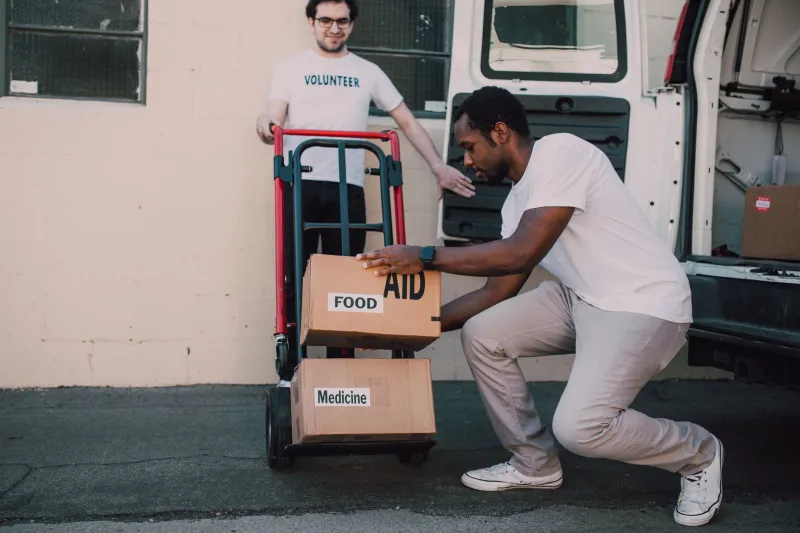
Housing is often the most urgent. Congregation members with spare rooms, finished basements, or rental properties frequently step forward within the first twenty-four hours. Food follows immediately: meal trains organized through apps or simple sign-up sheets can sustain a family for weeks. Financial assistance — drawn from church benevolence funds, passed through quiet individual donations, or raised through a brief congregational announcement — arrives without the lengthy eligibility assessments that characterize government aid programs. Childcare, transportation, clothing, furniture, and emotional support are layered in as needs become clear.
Perhaps most significantly, the support does not evaporate after the first dramatic week. Church networks tend to maintain sustained engagement with a family in crisis far longer than most secular relief efforts. A congregation member might continue driving a displaced neighbor to job interviews two months after the initial disaster. A small group might still be checking in on a grieving widow six months after a memorial service. The covenant of care does not come with an expiration date.
Voices From the Families Who Lived It
The most compelling testimony to this network's power comes from the families who have experienced it firsthand.
One Geneva woman, a single mother of three, described losing her employment and nearly her housing in the same month several years ago. She had attended her Methodist congregation for only two years at that point and considered herself, by her own admission, more of an occasional visitor than a true member. Yet when her pastor learned of her situation, the congregation responded with a thoroughness that still moves her to tears. "They didn't treat me like a charity case," she said. "They treated me like I was their family. Because apparently, I was."
A retired couple in Geneva recounted the aftermath of a significant flood that damaged the lower level of their home. While they waited for an insurance adjuster, church volunteers had already removed damaged drywall, set up fans, and catalogued salvageable belongings. "The insurance company took weeks," the husband noted. "The church took about four hours."
These accounts are not anomalies. They are patterns.
The Theology Beneath the Action
It would be a mistake to view this emergency response culture as mere neighborly goodwill, though goodwill is certainly present in abundance. What animates the congregational response is something more rooted: a theological conviction that the Body of Christ is a literal, functional, interdependent community — not a metaphor, but a lived reality.
Methodist tradition, in particular, has long emphasized what John Wesley called "practical holiness" — the insistence that genuine faith must express itself in concrete acts of mercy and justice. Wesley's early Methodist societies were, in many respects, mutual-aid networks: members contributed to common funds, visited the sick and imprisoned, and held one another accountable not only spiritually but materially. What Geneva's congregations are doing today is, in a very real sense, Wesleyan Christianity operating as it was always intended to.
This is not charity dispensed from a position of comfortable distance. It is solidarity — the willingness to enter into another person's difficulty and remain there.
A Safety Net No Government Built
Policymakers and social service professionals who study community resilience have increasingly recognized that faith-based networks represent a form of social capital that no government program has successfully replicated. The trust, relational depth, geographic distribution, and volunteer density that congregations bring to a crisis are simply not achievable through institutional means alone.
Geneva is fortunate to have a robust constellation of faith communities that take this responsibility seriously. First UMC Geneva is one part of a broader ecosystem that includes congregations of many traditions, all of which, at their best, understand themselves as communities of care embedded in the life of the city.
The challenge going forward is not motivation — the motivation is already there, written into the theology and the relational culture of these communities. The challenge is coordination: finding ways for faith networks to communicate across congregational lines during major crises, to share resources without duplicating effort, and to connect with the formal relief systems that eventually arrive on the scene.
Some Geneva congregations have already begun informal conversations about exactly this kind of inter-church coordination. The vision is not a bureaucracy. It is simply a network of networks — a community of communities — ready to move the moment the alarm sounds.
When the Storm Passes
Disaster, by its nature, is disorienting. It strips away the routines and assumptions that make ordinary life feel stable. What Geneva's faith communities offer in those moments is something that no relief fund, however generously endowed, can fully provide: the assurance that you are known, that you are valued, and that you are not alone.
The Sunday after the storm, the pews fill with people who have spent the week doing the unglamorous, unreported work of loving their neighbors. They bring with them the quiet dignity of having been the church not merely in word, but in deed. And in that gathering, something is reaffirmed that no spreadsheet will ever capture: that grace, when it takes human form, arrives fast, stays long, and asks nothing in return.