Mud on Their Boots, Fire in Their Hearts: How Geneva's Young People Are Discovering God Through What They Do
Mud on Their Boots, Fire in Their Hearts: How Geneva's Young People Are Discovering God Through What They Do
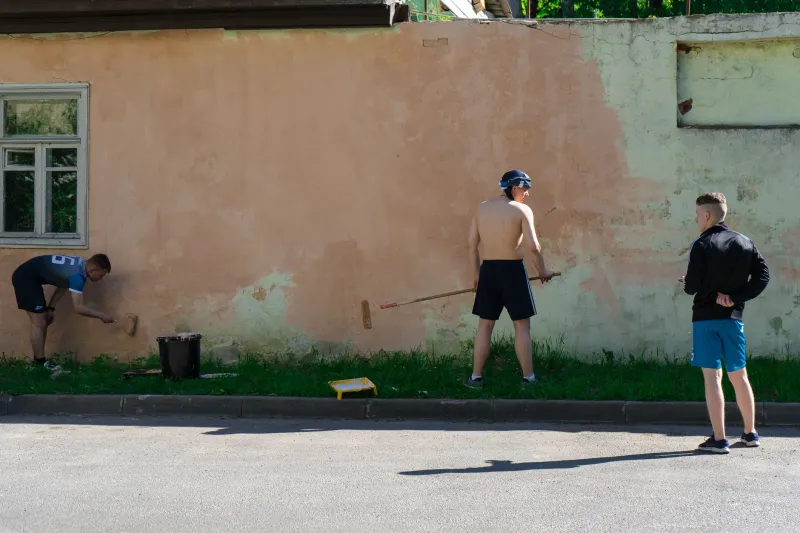
On a Saturday morning in late October, a group of teenagers from First UMC Geneva arrived at a modest home on the city's east side carrying paint rollers, drop cloths, and enough nervous energy to power a small generator. None of them had been asked to recite a creed or memorize a scripture passage before they came. They had simply been asked to show up — and to work.
By noon, two exterior walls had been freshly painted. By afternoon, the homeowner, an elderly widow who had been managing alone for years, was standing on her front porch with tears in her eyes. And somewhere between the first brushstroke and the last, something shifted in the young people doing the painting.
"I've sat through a lot of Sunday school," said Marcus, seventeen, who has attended First UMC Geneva since childhood. "But I don't think I ever actually felt what faith meant until I was standing on a ladder, sweating, and realizing that this — this right here — was why we talk about grace all the time."
His experience is not unique. Across Geneva and throughout Methodist congregations in the United States, a quiet but consequential transformation is underway in how young people engage with their spirituality. Increasingly, the defining moments of faith formation for teenagers and young adults are not happening during the sermon. They are happening at the food pantry, the tutoring table, the community garden, and the disaster relief site.
A Generation That Needs to Touch What It Believes
Research on generational spirituality has long suggested that younger Americans are skeptical of institutional religion while remaining deeply curious about meaning, purpose, and justice. A 2023 survey by the Springtide Research Institute found that young people between the ages of thirteen and twenty-five are far more likely to describe themselves as spiritual than religious — and that experiences of service and community connection rank among the top factors that deepen their sense of spiritual identity.
For churches like First UMC Geneva, that data is not a cause for alarm. It is an invitation.
"This generation is not disinterested in God," said the Reverend leading First UMC's youth programming. "They are disinterested in a version of faith that asks nothing of them except attendance. When we give them something real to do — something that actually matters to another human being — they catch fire."
That conviction has shaped a deliberate redesign of how the congregation structures its youth ministry. While Sunday morning worship remains a central gathering point, the programming calendar now places equal weight on what the staff calls "embodied discipleship" — spiritual formation through direct, hands-on engagement with the community.
What Discipleship Looks Like When It Gets Its Hands Dirty
First UMC Geneva's youth programs currently include monthly service projects in partnership with local organizations, a year-round food pantry volunteer rotation, a mentorship initiative pairing high school students with younger children in underserved neighborhoods, and a social justice cohort that meets biweekly to study issues ranging from housing insecurity to environmental stewardship.
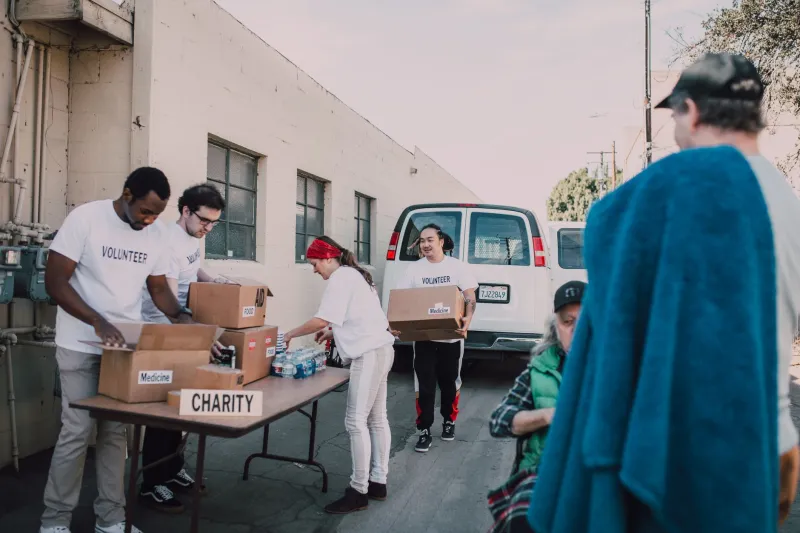
The food pantry work, in particular, has become a touchstone for many of the young people involved. Seventeen-year-old Amara, who began volunteering there as a freshman, describes the experience as the moment her faith stopped being theoretical.
"We read about Jesus feeding people. We sing about it. But when you're actually handing someone a bag of groceries and you can see that it matters — that they needed this — it's completely different," she said. "I started to understand what the church is actually supposed to be."
That understanding extends beyond individual moments of connection. Several of the youth program participants describe a growing sense of accountability — to one another, to their community, and to the values their faith tradition espouses. For many, this accountability has become more motivating than any doctrinal teaching alone could be.
The Theology Behind the Toolbelt
Methodism has always carried within it a strong current of social holiness — the idea, articulated by John Wesley himself, that personal faith is inseparable from public action. Wesley's famous directive to "do all the good you can, by all the means you can" was never intended as a supplement to Christian life. It was understood as the expression of it.
First UMC Geneva's approach to youth ministry is, in many ways, a recovery of that original emphasis. Rather than treating service as an add-on to a curriculum built around belief statements, the congregation has begun treating service as the curriculum — the primary space in which young people encounter scripture, wrestle with theology, and develop a personal relationship with the divine.
"We debrief after every project," explained one of the youth ministry coordinators. "We ask: where did you see God today? What made you uncomfortable? What do you want to understand better? Those conversations are some of the most theologically rich we have all year — and they happen in a church van on the way home from a job site."
What This Means for the Future of the Congregation
The implications of this shift extend well beyond the youth group. Across the United States, congregations that have successfully retained young members into adulthood consistently point to meaningful service and genuine community belonging — not doctrinal instruction alone — as the decisive factors. Churches that have adapted their formation models accordingly are seeing stronger intergenerational engagement, higher rates of continued participation after high school, and a deeper integration of young adults into the full life of the congregation.
At First UMC Geneva, youth participants in service-oriented programming are increasingly visible not just in their own ministry track, but in worship leadership, committee involvement, and congregational advocacy. Several former youth program participants have gone on to pursue careers in social work, education, public health, and nonprofit leadership — fields they trace, at least in part, to the values clarified during their years of service alongside the church.
"I knew I believed in something," said Jordan, now twenty-two, who was part of an early iteration of the mentorship initiative. "But I didn't know what I was willing to do about it until the church gave me a chance to actually do something. That changed everything."
A Faith That Fits the Whole Person
None of this is to suggest that worship, scripture, and theological reflection have been abandoned. They have not. But at First UMC Geneva, those practices are increasingly understood as sustaining a life of action rather than substituting for one. The sermon informs the service project. The service project illuminates the sermon. Each makes the other more urgent, more personal, more alive.
For the young people scraping paint and stocking shelves and sitting beside children who need someone to believe in them, that integration is the whole point. They are not performing faith for an audience. They are living it — imperfectly, energetically, and with mud on their boots.
And in that living, something ancient is being renewed.