Sacred Commitments, Secular Streets: How Geneva's Faithful Are Living Their Beliefs Six Days a Week
Sacred Commitments, Secular Streets: How Geneva's Faithful Are Living Their Beliefs Six Days a Week
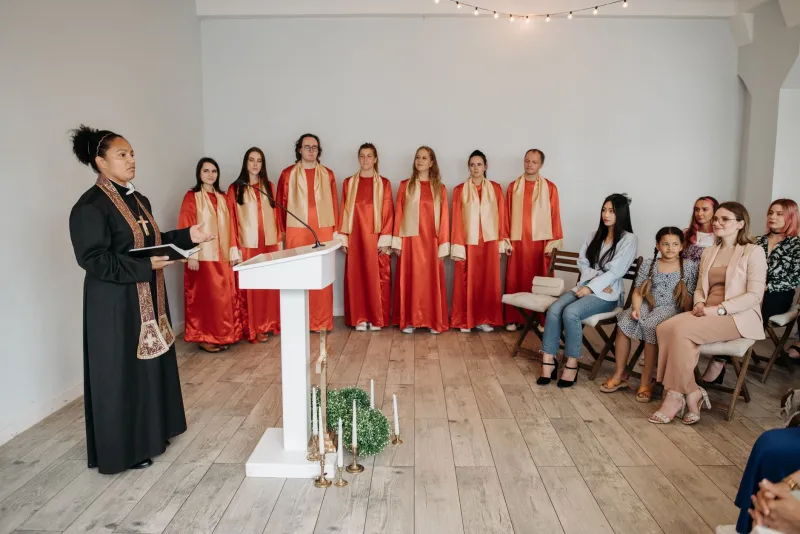
There is a particular kind of stillness that settles over a sanctuary after the final hymn fades. The candles dim, the bulletins are folded, and families make their way toward the parking lot with the warmth of community still fresh in their hearts. For generations, that warmth has been understood as the reward of Sunday morning — a spiritual refueling before the week resumes its demands.
But at First UMC Geneva, a growing number of members are asking a different question as they cross the threshold into the weekday world: What do I do with this now?
 Photo: First UMC Geneva, via cdn.pixabay.com
The answer, increasingly, is everything.
The Theology of the Ordinary Week
Methodism has never been a faith designed for the interior life alone. From John Wesley's insistence on combining personal piety with social holiness, the tradition has always held that genuine belief expresses itself outward — toward neighbors, strangers, and the structures of society itself. That theological DNA is very much alive in Geneva.
"Worship gives us language for what we believe," says one longtime First UMC Geneva member who coordinates the congregation's outreach calendar. "But the week gives us the opportunity to mean it."
This is not a matter of obligation or performance. Rather, it reflects a deeply held conviction that faith, when it is genuine, cannot be contained within scheduled hours. It overflows — into Tuesday afternoons at the food pantry, into Thursday evenings mentoring a teenager who needs a steady adult presence, into Saturday mornings picking up litter along the Fox River trail.
 Photo: Fox River, via i0.hippopx.com
Food Pantry Volunteerism: Presence as Ministry
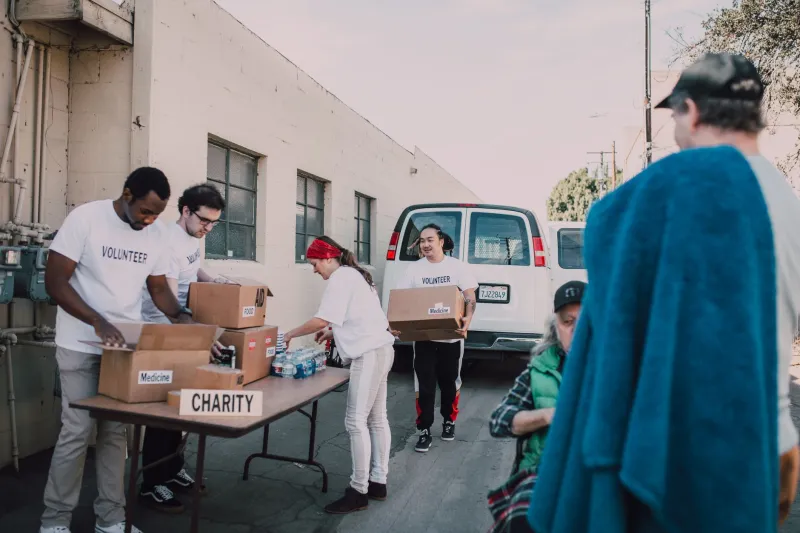
Among the most consistent expressions of weekday faith in the Geneva community is the steady stream of volunteers supporting local food assistance programs. Members of First UMC Geneva have long maintained partnerships with area food pantries, and the commitment is not casual. Volunteers sort donations, staff distribution hours, and — perhaps most importantly — show up with the kind of unhurried attention that transforms a transaction into an encounter.
"People don't just need groceries," observes one volunteer who has staffed pantry shifts for more than three years. "They need to be seen. When you take the time to learn someone's name, to ask how their kids are doing, you're doing something that a food drop-off box simply cannot."
That relational dimension is central to how First UMC Geneva understands service. The goal is not efficiency alone — it is dignity. And dignity, as the congregation understands it, is a spiritual practice as much as a social one.
Youth Mentorship: Investing in Futures Not Yet Written
Across the Fox Valley, young people are navigating a landscape of extraordinary complexity — academic pressure, social media's relentless comparisons, economic uncertainty, and, for many, the quiet ache of feeling unseen. Into that landscape, members of First UMC Geneva have stepped as mentors, tutors, and steady presences.
Through partnerships with local schools and community organizations, congregants are offering their time in structured mentorship programs that pair them with students who benefit from consistent adult guidance. The commitment is modest in its logistical demands — often just an hour or two per week — but its impact can be profound.
One mentor who works with middle-school students in the Geneva area describes the experience in terms that are unmistakably spiritual: "I'm not there to fix anything. I'm there to listen, to encourage, and to remind a young person that they matter. That feels like exactly what I'm called to do."
This is Wesley's social holiness made concrete — not a program, but a relationship. Not charity dispensed from a distance, but genuine investment in another human being's flourishing.
Neighborhood Clean-Ups: Tending the Common Ground
There is something quietly countercultural about a group of adults choosing to spend a Saturday morning picking up trash. It does not photograph as dramatically as a mission trip abroad or a large-scale fundraiser. But the members of First UMC Geneva who organize and participate in neighborhood beautification efforts understand that caring for shared spaces is itself a form of love.
The Fox River corridor, local parks, and neighborhood streets have all been sites of congregant-led clean-up efforts — events that consistently draw a mix of longtime members, newer attendees, and community neighbors who may have no formal connection to the church at all. That last detail matters enormously.
"When we work alongside people who aren't part of our congregation, we're not doing outreach," notes one organizer. "We're being neighbors. There's a difference, and the difference is important."
This distinction — between outreach as a strategy and neighboring as a posture — reflects a mature, progressive understanding of what it means to be a faith community embedded in a specific place. First UMC Geneva is not simply located in Geneva; it belongs to Geneva, and that belonging carries responsibility.
A Framework for Living Faith Beyond Sunday
For those inspired by these examples but uncertain where to begin, the path forward need not be elaborate. A few orienting principles can help translate Sunday inspiration into Monday action:
Start with what already moves you. Sustainable service flows from genuine care, not obligation. If food insecurity troubles you, the pantry is a natural fit. If you love young people, mentorship is waiting. Begin where your heart already points.
Commit to consistency over intensity. A single dramatic gesture rarely changes anything. Two hours every week for a year reshapes a relationship, a neighborhood, a life. Small, steady presence is the currency of real community impact.
Bring your congregation with you. Service is more sustainable — and more joyful — when it is shared. Recruit a fellow member. Make the drive together. Debrief over coffee afterward. Community multiplies both effort and meaning.
Let the work teach you. The people you serve will expand your understanding of faith, justice, and grace in ways that no sermon alone can. Approach service with genuine humility and curiosity, and you will receive far more than you give.
Connect your actions to your worship. Reflect on your service in prayer. Bring the faces you have encountered into your Sunday morning with you. Allow the two dimensions of your faith life to inform and deepen each other.
The Church That Leaves the Building
First UMC Geneva has always been more than a building on a street corner in the Fox Valley. It is a community of people who gather on Sundays to be renewed and then scatter across the week to be useful. The sanctuary is essential — but it is a beginning, not an end.
In a cultural moment when institutional trust is eroding and the relevance of organized religion is frequently questioned, communities like First UMC Geneva offer a quiet but compelling answer. The church earns its place in the neighborhood not by asserting its importance, but by demonstrating it — one volunteer shift, one mentorship hour, one bag of litter at a time.
Faith, as the congregation understands it, is not a Sunday costume. It is the fabric of an entire life. And in Geneva, Illinois, that life is being lived with remarkable intention, six days a week.