The Quiet Revolution Happening in America's Small Congregations — and Why Geneva Is Part of It
In 2023, the United States Surgeon General issued an advisory that would have seemed unthinkable a generation ago: loneliness, he declared, had become a public health epidemic. Approximately half of American adults reported measurable feelings of isolation. The social infrastructure that once knit neighborhoods together — the bowling leagues, the civic clubs, the front-porch conversations — had frayed in ways that were becoming medically, psychologically, and civically consequential.
And yet, in towns like Geneva, Illinois, something quietly extraordinary has continued to function. Something that predates the Surgeon General's advisory by decades, that operates without venture capital or algorithmic amplification, and that shows up on Tuesday mornings with a bag of groceries and a willingness to sit with a neighbor in their hardest hour.
 Photo: Geneva, Illinois, via cdn.audleytravel.com
We are talking about the local church. And it is long past time that America gave it proper credit.
The Data Behind the Story We Already Know
The sociological evidence for the community-sustaining power of religious congregations is, at this point, substantial and difficult to dismiss. Research from Harvard's Human Flourishing Program has found that regular participation in a religious community is one of the strongest predictors of life satisfaction, civic engagement, and even physical health outcomes in the United States. A 2020 Pew Research Center study found that Americans who attend religious services regularly are more likely to volunteer, more likely to vote, and significantly more likely to describe themselves as having strong social networks.
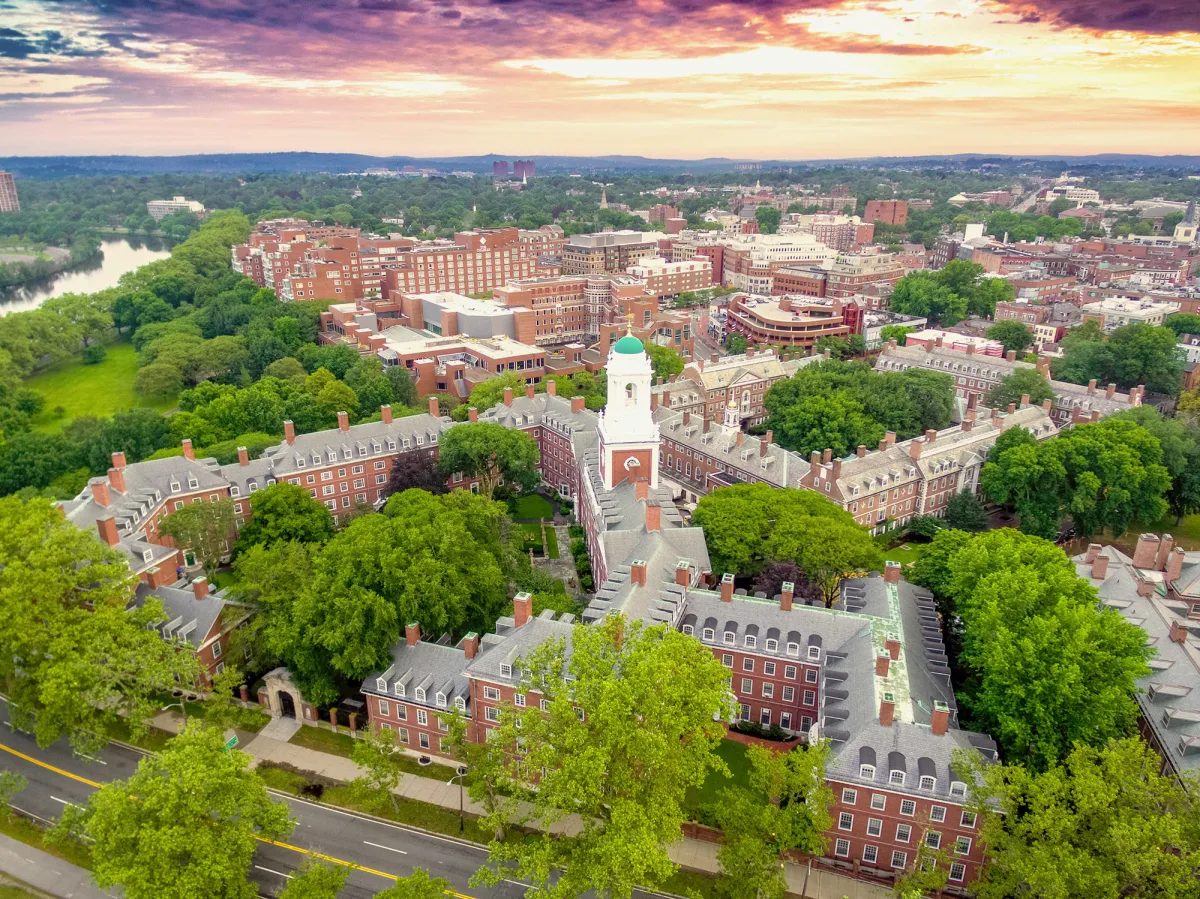 Photo: Harvard's Human Flourishing Program, via extension.harvard.edu
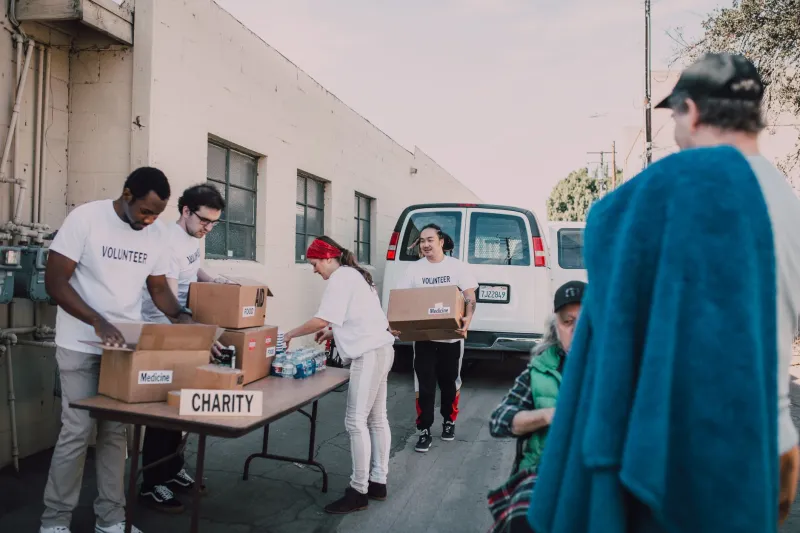
But statistics only gesture at what is actually happening on the ground. The real story is told in specifics: the food pantry that quietly serves 200 families a month without anyone issuing a press release. The after-school tutoring program staffed entirely by retired teachers from the congregation. The grief group that has been meeting in the same fellowship hall for eleven years, outlasting the therapists, the trends, and the cultural attention spans that have moved on to other crises.
These are not exceptional stories. They are the ordinary operations of thousands of congregations across the country — congregations that are rarely celebrated in national media precisely because they are not dramatic. They are simply consistent.
What Geneva Teaches Us About Scale and Belonging
Geneva, Illinois is not a major metropolitan center. It is a mid-sized Fox River community with deep roots, a strong sense of civic identity, and the kind of social fabric that larger cities often lose in the rush toward density and efficiency. It is also, not coincidentally, home to congregations like First UMC Geneva that have spent generations building the kind of trust that cannot be manufactured on a timeline.
 Photo: First UMC Geneva, via 1.bp.blogspot.com
There is something instructive about the scale at which a community like ours operates. We are large enough to offer meaningful programming — food ministries, counseling resources, youth development, community outreach — but intimate enough that people are genuinely known by name. The pastor knows about the surgery. The small group leader remembers the job interview. The volunteer coordinator knows which family just moved in and might need a meal.
This is not a feature that can be scaled by a startup or replicated by a government agency. It is the product of sustained, incarnational presence in a specific place over a long period of time. It is, in the plainest sense, community — and it is precisely what the loneliness epidemic is eroding everywhere except in places that have protected it.
Progressive Faith and the Public Good
It is worth being direct about something that sometimes gets lost in broader conversations about religious institutions: not all congregations operate from the same set of values, and values matter enormously in determining who gets welcomed, who gets served, and who gets left out.
A progressive Methodist congregation like First UMC Geneva approaches community service from a theological framework that insists on the inherent dignity of every person — not as a policy position, but as a conviction rooted in the belief that all people bear the image of the divine. That means our food pantry does not ask about immigration status. Our grief groups do not require doctrinal agreement. Our after-school programming does not sort children by family structure or religious background.
This is not incidental. It is, in fact, the theological engine that drives the social impact. When a congregation genuinely believes that grace is for everyone — not just the members, not just the believers, not just the people who look and think and vote a particular way — the community programs that flow from that belief tend to be more expansive, more inclusive, and ultimately more effective.
The Unsung Infrastructure of American Life
Politicians across the ideological spectrum have spent decades debating the proper role of government in addressing poverty, isolation, addiction, and educational inequity. What rarely enters those debates is an honest accounting of what local religious congregations are already doing — and have been doing, consistently and without fanfare, for generations.
According to a 2016 study published in the Interdisciplinary Journal of Research on Religion, the average American congregation contributes approximately $1.6 million in economic value to its surrounding community annually through direct services, facility use, volunteer hours, and social network effects. Multiply that across the roughly 380,000 religious congregations in the United States, and the aggregate contribution is staggering — well into the hundreds of billions of dollars, most of it invisible to the metrics that policymakers tend to track.
First UMC Geneva is one node in that vast, informal network. A single congregation in a single river town in northern Illinois. And yet the ripples extend outward in ways that are genuinely difficult to quantify: the teenager who found mentorship in our youth program and went on to become a teacher. The widow who found her footing again in a small group and now facilitates one of her own. The family that arrived at our food pantry in crisis and, years later, now volunteers there every third Saturday.
Why This Moment Matters
We are living through a period of acute social fragmentation. Trust in institutions is at historic lows. The platforms that promised to connect us have, in many cases, deepened our sense of alienation. The communities that once formed naturally — through proximity, shared work, and neighborhood life — have been disrupted by mobility, remote work, and the atomizing logic of modern consumer culture.
In this environment, the local congregation is not a relic. It is a resource — one of the few remaining institutions in American life that asks people to show up in person, to be known by name, to commit to something larger than themselves, and to extend care across lines of difference.
At First UMC Geneva, we do not take that responsibility lightly. We understand that when someone walks through our doors — whether they are a lifelong Methodist or a person who has not set foot in a church in twenty years — they are, in some sense, looking for what every human being needs: to belong somewhere, to matter to someone, and to find a reason to believe that the world is capable of being made better.
We believe it is. And we believe that small towns, small congregations, and ordinary acts of neighbor-love are how that work gets done — one Tuesday morning, one casserole, one conversation at a time.
That is not a small thing. That is, in fact, everything.