Roots Over Reach: Why Geneva Families Are Trading Convenience for Congregation
Sunday mornings in American family life have never been more contested. Between travel sports, exhausted parents, brunch culture, and the ever-present option to attend a polished service on a phone screen, the traditional practice of gathering with a local congregation has become, for many households, an item on an optional list rather than an anchor to the week. And yet, something unexpected is happening in Geneva.
Families — young ones especially — are choosing to stay put. Not because their options are limited, but because they have looked at the full menu of modern life and decided that depth matters more than breadth.
The Cost of Endless Options
To understand why this shift is meaningful, it helps to understand what it is pushing against. The contemporary American family operates inside a scheduling ecosystem of remarkable complexity. Youth athletics now routinely claim Sunday mornings. Experiential education, travel, and enrichment activities pull children in dozens of directions. And the pandemic accelerated a digital turn in religious life that made it genuinely possible to consume worship the way one consumes a podcast — on demand, in the background, without commitment.
These are not inherently wicked developments. But they share a common feature: they ask nothing of us. They are designed for convenience, and convenience, however pleasant, does not build community.
Church, at its most authentic, does the opposite. It asks you to show up when you are tired. It places you next to people you did not choose. It invites your children into relationships with elders who remember things about this town and this world that no algorithm has indexed. And it does all of this, week after week, until something begins to form in you that could not have formed any other way.
What Commitment Actually Produces
Families who have made this countercultural wager speak about it in strikingly similar terms. The word that surfaces again and again is known. Not followed, not liked, not networked with — known. Known by name, known in grief, known in the ordinary Tuesday of a difficult month.
One Geneva mother who returned to regular worship after years of casual attendance described the moment she realized what her family had been missing. Her youngest child, she said, had begun to recognize and greet the same adults every single Sunday — the retired schoolteacher who always sat in the third row, the deacon who handed out bulletins at the door, the choir member who made a point of learning every child's name. These were not programmed relationships. They were the organic byproduct of sustained presence.
"I realized my kids were being shaped by a community," she said, "not just by us."
This is precisely what developmental researchers and theologians alike have argued for decades: children form moral and spiritual identity not primarily through instruction, but through immersion in communities that embody values over time. A congregation that gathers faithfully, serves its neighbors, mourns its losses, and celebrates its joys together is, functionally, a formation environment. No curriculum can substitute for it.
The Parenting Dimension
For parents, the decision to prioritize congregational life carries a particular weight. It means saying no — to the travel team that practices on Sunday mornings, to the lazy weekend that everyone deserves, to the cultural pressure that suggests organized religion is optional at best and outdated at worst.
But the families making this choice describe something that feels less like sacrifice and more like relief. There is, they say, a kind of freedom that comes from having decided. When belonging to a congregation is a settled commitment rather than a weekly negotiation, the family's moral and relational center of gravity becomes more stable. Children know where they stand. Parents know what they are building toward.
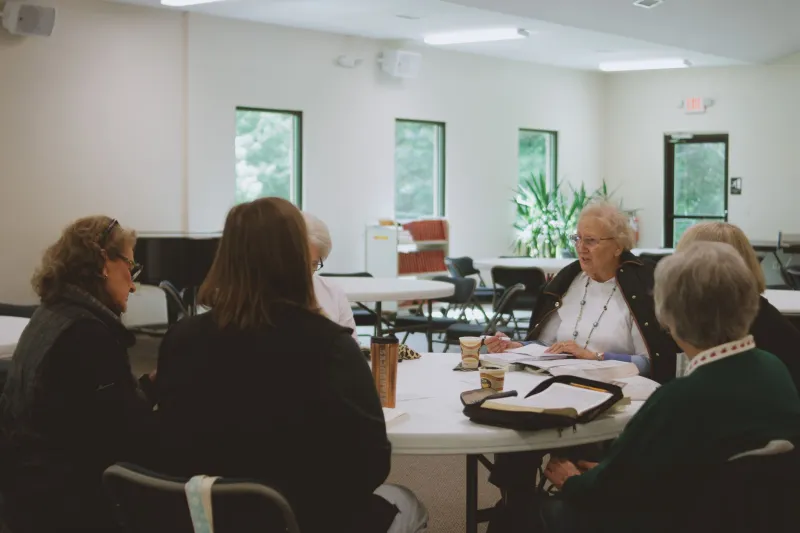
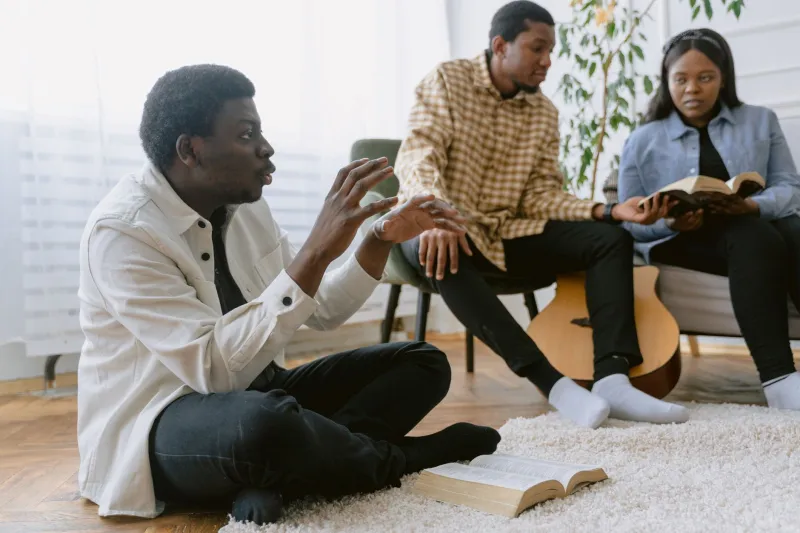
At First UMC Geneva, this impulse finds expression in programs designed not just to retain families but to integrate them — small groups that meet in homes, intergenerational service projects, mentorship pairings between older members and young parents navigating the particular pressures of raising children in the digital age. The congregation has recognized that commitment is not something families simply have; it is something they are helped to sustain.
Belonging That Algorithms Cannot Replicate
There is a reason that social media platforms, for all their sophistication, have not solved the loneliness epidemic. Connection, it turns out, requires friction. It requires the awkward coffee hour conversation, the volunteer shift you did not particularly want, the funeral you attend for someone you barely knew because their family is your family now.
The church, at its best, is a factory of precisely this kind of friction — the productive, humanizing kind that gradually makes strangers into neighbors and neighbors into something closer to kin.
Geneva families who have made this choice are not naive about the institution's imperfections. They know that congregations can disappoint, exclude, and fall short of their own ideals. But they have decided that the answer to an imperfect community is not no community — it is better community, pursued with intention and grace.
A Countercultural Act of Hope
Choosing congregation over convenience is, in the end, an act of hope. It is a wager that human beings are made for more than curated experiences, that children need witnesses as well as teachers, and that the slow, unglamorous work of showing up together across years and seasons produces something irreplaceable.
In a city like Geneva, where the pace of life presses hard against the margins, that wager is increasingly being made — and, by the testimony of those who have made it, increasingly being won.
The sanctuary, it turns out, is not a relic. For a growing number of families, it is the most countercultural, most radical, most human choice they have made.