When the Sanctuary Is Too Loud: Building Worship That Welcomes Every Nervous System

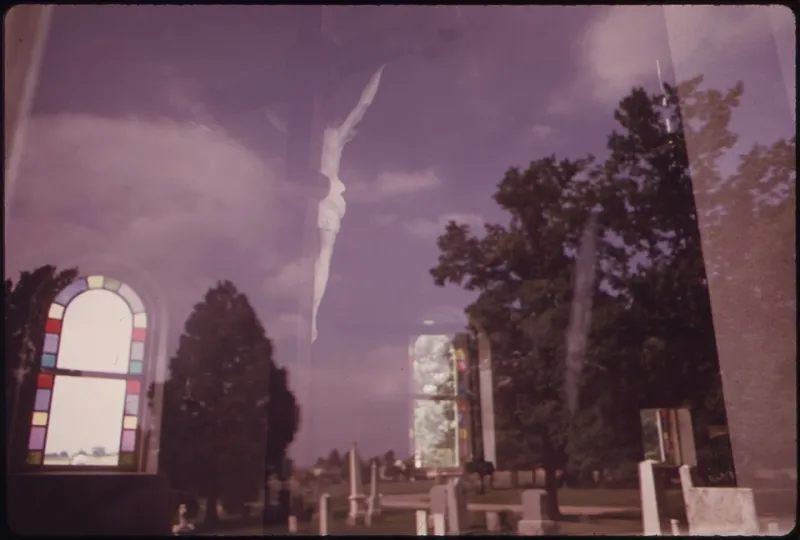
Photo: MissLunaRose12, CC BY 4.0, via Wikimedia Commons
There is a particular kind of car ride home from church that many parents know well. The child in the back seat is spent — overrun by the organ, the handshake line, the fluorescent glow of a fellowship hall, the Sunday school teacher who meant well. The parents are spent too, and quietly wondering whether it is worth trying again next week. Often, they do not.
That is not a discipline problem. It is an architecture problem, a liturgy problem, and, at root, a theological one.
The Sunday Morning Minefield
The numbers are not obscure. Roughly one in six children in the United States has a developmental disability, and the broader category of neurodivergence — autism, ADHD, sensory processing differences, anxiety, tic disorders — touches a substantial share of any congregation's families, whether or not clergy know it. Many of those families have already stopped attending somewhere else. They are not looking for a church that will fix their child. They are looking for one that will not flinch.
Sunday morning is unusually demanding: crowds, amplified music, unpredictable transitions, expectations of stillness, physical contact from strangers, and a liturgy that can shift depending on the week. For a child whose nervous system registers the world at higher volume, that is not a minor inconvenience. It is a weekly test of endurance, and eventually the test is failed by the church rather than the child.
What Sensory-Friendly Actually Looks Like
In Geneva, the congregations making real progress tend to arrive at the same set of measures — practical, inexpensive, and surprisingly obvious once you have listened to parents.
A quiet room that is genuinely quiet. Not a nursery with a television and a half-dozen toddlers, but a carpeted space with soft light, a few cushions, and a live audio feed of the service so families remain part of the whole body rather than exiled from it.
Headphones and fidgets at the welcome table. Noise-reducing earmuffs, weighted lap pads, and a basket of small tactile items, offered without commentary. The point is that families do not have to ask, explain, or apologize.
A predictable order of service. Printed, large-type, with transitions marked. Predictability is not the enemy of the Spirit; it is often the doorway into worship for people who cannot follow cues they cannot anticipate.
A wiggle-friendly zone. A few pews near a side aisle where movement is not treated as a disruption. This usually turns out to be popular with everyone, including grandparents and anyone who has ever sat through a long sermon with a toddler.
A low-scent policy. Unscented candles, no heavy floral arrangements on high-attendance Sundays, and a gentle reminder in the bulletin. For some members, this is hospitality to a chemical sensitivity; for all of us, it is a small act of restraint.
Trained volunteers, and one named person. Families consistently say the difference between a stressful Sunday and a bearable one is a single human being who knows their child's name and does not need to be briefed each week.
The Theology Beneath the Headphones
It is tempting to file all of this under logistics. It belongs under ecclesiology.
Paul's image of the body in First Corinthians is not a metaphor about charm; it is a claim about sufficiency. The eye cannot say to the hand, "I have no need of you." A congregation that can only worship when every nervous system behaves identically has narrowed the body to a preference group. A congregation that makes room for a body that fidgets, hums, rocks, or steps out at the passing of the peace is not lowering the bar. It is discovering the bar was never ours to set.
There is also something in the pattern of Jesus that bears noticing. He did not require the crowds to compose themselves before he healed them. He taught in parables and in plain speech, healed in noisy streets and in quiet rooms, and often withdrew to stillness himself. The gospel moves between clamor and quiet with ease. Our liturgies mostly do not, and that is a choice.
Training the Welcome
The hardest changes are not architectural. They are cultural, and they live in small habits: not shushing a child who vocalizes during the sermon; not staring when someone wears headphones in a pew; not treating a mid-service exit as a crisis. Volunteers and ushers can be taught to read cues without diagnosing, to ask parents what helps, and to receive a "no thank you" with grace.
A useful practice: before every service during a particular season, the hospitality team asks one question — who might have struggled last week, and what would have helped? It takes ninety seconds and changes the culture of a door.
The Liturgy of Flexibility
This is also a chance to re-examine the elements of worship that quietly exclude. Is the children's moment a performance or a welcome? Are the communion stations reachable without a long walk and a crowd? Are gluten-free and grape-juice options clearly available, or must someone ask? Is the Christmas Eve service offered in a shorter, softer form for families for whom the traditional service is simply too much — not as a lesser worship, but as a faithful one?
These are not concessions. They are the ordinary work of a community that believes every member of the body has something to offer the whole.
Small Changes, Wide Doors
Almost nothing on this list requires a capital campaign. Most of it costs a few hundred dollars and a willingness to hear what families have been saying for years. What it requires more than anything is for congregations to stop thinking of these families as a special case and start thinking of them as the reason the doors exist.
The table is long. There is room at it for a child with headphones, a teenager who needs a walk, and a mother who is crying in the back row for reasons she cannot explain. When the sanctuary is too loud, we can turn down the volume, or we can widen the room. The second is what we have always been called to do.