The Hidden Economy of Grace: How Geneva Believers Are Redefining What It Means to Give

The offering plate is a familiar symbol. It passes down the pew with a quiet dignity that has marked Protestant worship for generations, and what is deposited there — whatever the amount — carries a significance that is simultaneously practical and sacred. But to limit the conversation about Christian generosity to that weekly ritual is to miss the larger, stranger, more beautiful economy that hums beneath the surface of Geneva's congregational life.
Because the offering plate, it turns out, is only the beginning.
Beyond the Budget Line
Stewardship, in the language of the church, has traditionally referred to the responsible management of resources entrusted to us — money, time, creation, talent. In practice, however, stewardship conversations in most congregations collapse fairly quickly into discussions about pledging and the annual budget. These conversations matter. Congregations have real obligations: staff salaries, building maintenance, program costs, benevolence commitments. None of that runs on goodwill alone.
But the theological imagination at the heart of Christian giving is far wider than any budget process can contain. And in Geneva's faith communities, that wider imagination is finding concrete, quietly radical expression in ways that rarely make it into a newsletter or a stewardship sermon.
Consider the practice — common enough to have become something of an informal tradition at several local congregations — of anonymously covering utility bills for families in financial distress. The mechanics vary. Sometimes a deacon or a pastoral care team becomes aware of a need through a routine visit. Sometimes a neighbor mentions a struggle in passing to a fellow pew-sitter. What follows is not a formal application or a committee vote. It is simply a phone call to the utility company, a payment made in a name that will never be announced from the pulpit, and a quiet return to the ordinary rhythms of congregational life.
The recipient, if they ever learn the source, typically encounters not a benefactor seeking recognition but a community that has simply decided their dignity matters more than anyone's need for credit.
Youth, Mission, and the Theology of Investment
Among the lesser-celebrated dimensions of congregational generosity is the funding of youth mission experiences — trips that carry young people into communities far different from their own and return them, reliably, with their assumptions rearranged and their faith enlarged.
These experiences do not fund themselves. Beyond the formal fundraising efforts that youth groups undertake with admirable energy, a quieter stream of support flows from the congregation's older members — adults who will never travel on these trips, who have no grandchildren in the youth group, who give simply because they believe that a seventeen-year-old discovering her capacity for service in an underserved community is one of the most important investments a church can make.
This is intergenerational stewardship in its most generous form. It asks nothing in return except the possibility that the young person who returns from that trip will, decades from now, fund the next generation's formation with the same quiet conviction.
Managing What Belongs to Everyone
Generosity is not only a matter of giving outward; it is also a matter of managing well what has been entrusted inward. The volunteers who serve on church finance committees, building and grounds teams, and administrative boards are practicing a form of stewardship that receives almost no public recognition — and that is, in many ways, the point.
These are the members who scrutinize line items not out of miserliness but out of a deep conviction that the congregation's resources belong, ultimately, to God and to the community's mission. They are the ones who push back gently when spending feels extravagant and advocate firmly when investment in people or programs is genuinely warranted. They bring the same ethical seriousness to managing a church budget that they would bring to any sacred trust.
At First UMC Geneva, the theology underlying this kind of institutional stewardship is explicit: we are not owners of what passes through our hands, but managers. That posture — humble, accountable, oriented toward purpose rather than accumulation — shapes not just financial decisions but the entire culture of how the congregation relates to its material resources.
The Stewardship of Presence
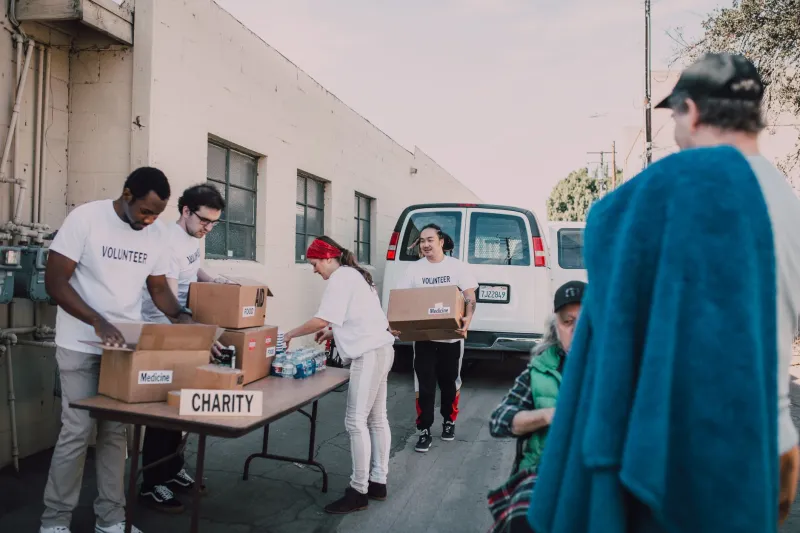
Perhaps the most undertheorized form of generosity in congregational life is the gift of presence — the person who drives an elderly member to her chemotherapy appointment, the couple who quietly moves into a neighborhood in transition because they believe their presence there matters, the retiree who shows up every Tuesday morning to open the building for the food pantry even when his joints ache and the weather is discouraging.
None of these acts appear in a financial report. None of them will be celebrated at an annual stewardship dinner. But they are, by any serious theological account, among the most significant forms of giving a believer can practice. They represent the offering not of a portion of one's income but of one's actual life — of the irreplaceable hours and energy and attention that constitute human existence.
This is stewardship as spiritual discipline: not a seasonal campaign but a continuous orientation of the self toward the needs of the neighbor and the flourishing of the community.
Generosity as Formation
What the most generous members of Geneva's congregations seem to understand — and what the least generous are often in the process of learning — is that giving changes the giver. The anonymous bill payment, the youth mission investment, the Tuesday morning at the food pantry: these are not just acts of charity. They are practices that, performed repeatedly over time, reshape the practitioner's relationship to money, to time, to other people, and to God.
Generosity, in this light, is not a virtue you have and then express. It is a virtue you develop by practicing — imperfectly, incrementally, and in community with others who are practicing alongside you.
The offering plate matters. But the hidden economy of grace that surrounds it — the anonymous gifts, the quiet investments, the faithful stewardship of shared resources — is where the deepest formation happens. And in Geneva, that economy is more alive than most people know.