A Knock at the Door, a Hand to Hold: How Geneva's Pastoral Visitors Are Reclaiming the Most Human Act in Ministry
A Knock at the Door, a Hand to Hold: How Geneva's Pastoral Visitors Are Reclaiming the Most Human Act in Ministry
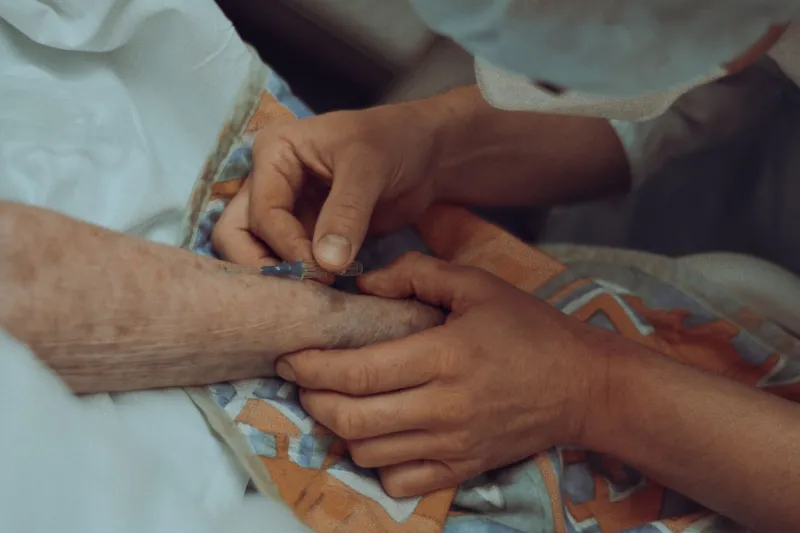
The room smells of antiseptic and recycled air. A television hums somewhere in the corner, tuned to a channel no one is really watching. A woman in her seventies lies propped against pillows, her family two hours away and her phone battery nearly dead. She has been in the hospital for four days. She has spoken to nurses, to technicians, to a hospitalist who moves through the ward with efficient kindness but little time to linger.
And then someone knocks.
It is not a doctor. It is not a social worker. It is a woman from her congregation — someone she recognizes from the third pew on the left, a face that belongs to Sunday mornings and fellowship halls and the ordinary, sacred rhythm of shared worship. She has brought nothing except herself. She sits down. She asks how the patient is really feeling. She stays for forty-five minutes.
This is pastoral visitation. And according to those who practice it and those who receive it, it may be one of the most quietly transformative gifts a faith community can offer.
An Ancient Practice in a Distracted Age
The tradition of visiting the sick and the isolated stretches back to the earliest expressions of Christian community. In the Gospel of Matthew, the act of visiting the imprisoned and the infirm is named explicitly as an encounter with the divine. John Wesley, the founder of Methodism, was famously relentless in his own visitation practice, walking miles to call on the poor and the suffering in eighteenth-century England. He considered it inseparable from authentic faith.
And yet, in the contemporary church, pastoral visitation has often been quietly deprioritized — crowded out by programming demands, budget constraints, and the assumption that a text message or a Facebook comment constitutes meaningful contact. Clergy carry heavier administrative loads than previous generations. Volunteers are stretched thin. And the cultural expectation that the sick or grieving should simply announce their needs — rather than be sought out — has made the proactive visit feel almost countercultural.
Which is precisely why, at First United Methodist Church of Geneva and congregations like it, the intentional revival of this practice feels not like nostalgia, but like resistance.
What No Algorithm Can Replicate
Ask anyone who has received a pastoral visit during a serious illness or a period of profound isolation, and the response is remarkably consistent. It is not the words that matter most. It is the physical presence.
"There is something that happens when a person actually enters your space," reflects one Geneva congregation member who spent six weeks recovering from surgery with limited mobility last winter. "They chose to be there. They drove across town. They sat in that chair. No email does that. No prayer emoji does that."
This distinction — between expressed concern and embodied presence — sits at the theological heart of what pastoral visitors describe as their calling. The incarnational logic of Christianity, after all, is precisely that love shows up in a body. That the sacred becomes real through physical proximity. Pastoral visitation enacts that theology in the most literal way imaginable.
Volunteers who serve on First UMC Geneva's visitation team describe a ministry that asks relatively little in terms of skill and almost everything in terms of willingness. "You don't need to have the right words," says one longtime volunteer who has been making hospital and home calls for nearly a decade. "You need to be willing to sit with someone in their discomfort without trying to fix it. That's harder than it sounds, and it's more valuable than most people realize."
The Homebound and the Forgotten
While hospital visits carry their own particular weight, it is perhaps the homebound visitation ministry that addresses the most persistent and least visible form of suffering in any community: chronic loneliness.
Across Geneva, there are congregation members — elderly, disabled, or simply no longer able to drive — who have not attended worship in months or years. They remain on the rolls. They receive the bulletin by mail. But the living, breathing texture of community has receded from their daily lives in ways that can quietly corrode both mental and physical health. Research consistently links social isolation to elevated risks of depression, cognitive decline, and cardiovascular disease. The pastoral visitor, in this context, is not merely offering spiritual comfort. They are, in a very real sense, delivering medicine.
"I think about one woman I visit regularly," shares a member of the visitation team. "She told me once that the week I come is the week she gets dressed. That she puts on a real blouse and does her hair. Not because I care what she's wearing — but because someone is coming, and that means the day matters."
The day matters. In those three words lives an entire theology of human dignity.
Training Hearts, Not Just Schedules
Effective pastoral visitation does not happen by accident. At First UMC Geneva, volunteers who serve in this capacity receive orientation that covers not only the practicalities — hospital etiquette, privacy considerations, how to respond to expressions of grief or anger — but also the interior work of the visitor themselves. How to listen without redirecting. How to tolerate silence. How to leave a room without making the person feel abandoned.
Clergy play an essential coordinating role, identifying congregants who have fallen away from regular attendance, following up on prayer requests that signal deeper need, and ensuring that no one remains invisible simply because they are no longer able to show up on Sunday morning. The pastoral relationship, in this model, is not contingent on a person's ability to participate actively in congregational life. It follows the person wherever they are.
This is, in many ways, a counter-narrative to the metrics-driven culture that has shaped so much of American institutional life — including, at times, the church. Pastoral visitation cannot be easily quantified. It does not generate headlines or fill pews in any direct or traceable way. It simply tends to human beings in their vulnerability, week after week, with no expectation of return.
The Gift That Flows Both Ways
What surprises many new volunteers is the degree to which the ministry transforms them as much as those they visit. Sitting regularly with people who are facing illness, loss, or the long diminishment of age has a way of reordering one's priorities with remarkable efficiency.
"I go in thinking I'm giving something," admits one volunteer. "And I come out having received more than I can articulate. These people have lived. They have perspective that I desperately need. The visit is supposed to be for them, and somehow it ends up being for both of us."
This mutuality — the recognition that ministry is never a one-directional transaction — reflects one of the deepest convictions of progressive Methodist theology: that every person, regardless of their circumstance, bears the image of the divine and has something irreplaceable to offer the community.
An Invitation to Show Up
First UMC Geneva is actively seeking individuals who feel called to this ministry. No theological degree is required. No particular gift for words. Only the willingness to carve out time from a busy life, to walk through a door, to sit down, and to be genuinely present with another human being in their need.
In a season when so much of our communication has become faster, flatter, and more disposable, the pastoral visit stands as a quiet act of defiance — a declaration that some things cannot be digitized, that some forms of care require a body in a chair, and that the church's most ancient calling is also, perhaps, its most urgently needed one.
The knock at the door. The hand extended. The unhurried hour. These are not small things. In the economy of grace, they may be among the largest things we do.